China’s Air Defense Zone
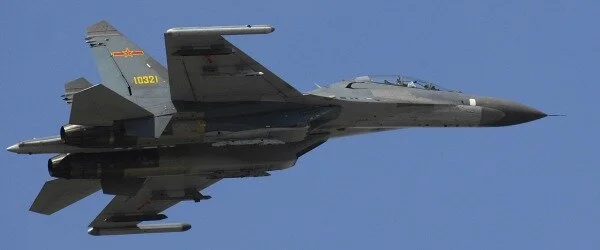
On Saturday, November 23, 2013, China declared an air defense identification zone covering the disputed Senkaku/Diaoyu islands in the East China Sea, effective at 10:00am Beijing time. Under these rules, any aircraft crossing the zone would be required to follow the identification requirements outlined by Beijing. This includes reporting flight plans to China’s Foreign Ministry and providing aircraft radio and logo identification. As of this writing, Singapore Airlines and Qantas have agreed to abide by the identification rules, while Japan Airlines and All Nippon Airlines have not, citing the wishes of the Japanese government. Professor Carlyle Thayer of the Australian Defense Force Academy views this move as a Chinese attempt to drive a wedge between the United States and Japan. This could very well be true – Japan maintains that both Washington and Tokyo flatly reject the zone, while the United States has advised its aircraft carriers and commercial airliners to abide by it. However, the events of Tuesday, November 26th, coupled with Malaysia’s 2002 success in retaining ownership of the Sipadan and Ligitan islands, show that China’s true motive stems from a desire to strengthen its claim over the disputed islands by continuing to exercise authority over them.From 1969 to 2002, the Sipadan and Ligitan islands were subject to a territorial dispute between Malaysia and Indonesia. After bringing the case before the International Court of Justice, possession was awarded to Malaysia on the basis of continuous, effective occupation and administration. This is exactly what the Chinese government is trying to establish with the imposition of its air defense zone. Strong denunciations9 from Secretaries Hagel and Kerry and the subsequent unannounced transit of two unarmed B-52 bombers over the disputed islands on November 26th, provide evidence that the United States suspects this. The United States is attempting to both co-opt China’s attempt at administration over the island and provide a strong show of support for its Japanese ally.China has repeatedly stated that it does not want to multilateralize the South China Sea territorial disputes, and has rebuked outside parties that try to intervene. However, China may be hedging its bets by preemptively attempting to demonstrate authority over the lands it claims. In its dispute with Vietnam over the Paracel and Spratly Islands, China established Sansha City to officially administer the two island chains in 2012. Additionally, in its Scarborough Shoal dispute with China, the Philippines accused China of laying the foundation for a permanent Chinese settlement on the disputed islands in September. This is territory that is well within the Philippines’ Exclusive Economic Zone under the UN Convention on the Law of the Seas. Manila has good reason to be concerned about China’s intentions. In 1995, Manila found that China was constructing military-like structures on the Philippine-owned Mischief Reef and in 1998 Chinese construction workers were seen building a landing strip.Despite its wish to avoid outside arbitration and multilateralization of the South China Sea disputes, China’s actions show that it is attempting to demonstrate continuous and effective control over these disputed territories in order to strengthen the credibility of its claims. The declaration of an air defense zone is just the latest chapter in China’s coordinate effort to fulfill the promise of its 9-dash line map. Actions taken by the United States to directly challenge China’s unilateral air defense zone is a strategic move to co-opt Beijing’s attempt to legitimize its hold on the disputed South China Sea territories. While it remains to be seen if this will signal greater American involvement in this dispute, it is clear that China’s newest act represents one more step in Beijing’s mission to bring the South China Sea under the Chinese flag. This image is being used under Creative Commons licensing. The original source can be found here.
