In Lebanon, Hezbollah Flaunts Its Power
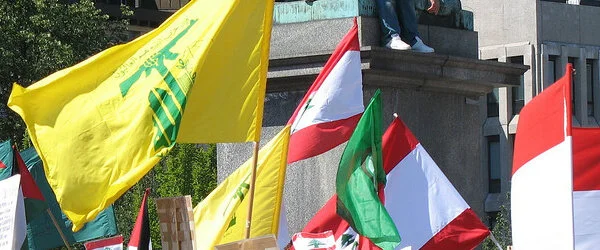
Lebanon is once again divided along sectarian lines. Hezbollah has become so powerful that the militant organization now greatly influences the direction of governance in the country.Lebanon is once again divided along sectarian lines. Hezbollah has become so powerful that the militant organization now greatly influences the direction of governance in the country.Hezbollah’s strength was evidenced by Lebanese responses to a United Nations Security Council statement on August 3rd that condemned violence in Syria. The Lebanese government, controlled by Syria-ally Hezbollah, “disassociated” itself from the U.N. statement because, according to prime minister Najib Mikati, it is opposed to intervention in Syrian internal affairs. A Lebanese leader criticized the stance, noting “something must be wrong in Lebanon when 14 out of 15 countries voted in favor of the statement, especially when these countries included Russia, Brazil, China and others.” Today, Hezbollah and its allies control 18 of the 30 cabinet posts and a majority of the parliament in Lebanon.Hezbollah’s strength in Lebanon is further evidenced by the government’s reaction to the U.N.’s Special Tribunal for Lebanon, created to investigate the killing of former prime minister Rafik Hariri in Beirut in 2005. Hezbollah’s avowed hostility toward the tribunal puts prime minister Mikati in a difficult position.The tribunal recently handed down an indictment with a request to the Lebanese government to arrest four senior members of Hezbollah. This ruling has divided the Lebanese people along sectarian lines—Hezbollah and its Christian allies are against the tribunal’s ruling, while followers of the opposition party, mainly Sunni Muslims, support the tribunal’s decision.Meanwhile, Hezbollah denies any involvement in Hariri’s murder. Hasan Nasrallah, Hezbollah’s secretary-general, blasted the tribunal, claiming it was a joint U.S.-Israel conspiracy to gain power and weaken the organization. In January, Hezbollah went so far as to force the resignation of the cabinet led by Hariri’s son Saad, which cooperated with the tribunal, by removing its ministers from the government.When the tribunal submitted its arrest warrants, Nasrallah’s response was strident. He promised that the four Hezbollah members would never be found or arrested, not even “in 300 years.” He vowed that Lebanon would not cooperate with the tribunal, flaunting his power as Hezbollah’s head and appearing to speak for Mikati. Despite Nasrallah’s blantant disrespect for the tribunal, Mikati must decide whether to cooperate with the tribunal backed by the United States, which provides significant military aid to Lebanon, or follow his sponsor, Hezbollah.The Lebanese parliament sided with the tribunal with 68 of 128 members voting in favor. Mikati claimed “the government would continue the path of the tribunal and continue to cooperate with the U.N. Security Council Resolution which set up the tribunal to see justice served.” But opposition MPs found Mikati’s statement unconvincing and did not believe that the Mikati government would arrest Hezbollah suspects or cooperate with the tribunal. Even though Mikati is believed to be “a middle ground candidate,” some claim that he is subject to blackmail and intimidation from Hezbollah.Nasrallah’s incendiary stance against the tribunal is pressuring Mikati to fall in line—or be pushed out. Will Mikati resort to the use of force to obtain the arrests? Assuredly not, and it seems likely that the four Hezbollah accused will remain hidden.It remains to be seen whether Mikati will be able to walk a middle ground, keep the peace, and serve the Lebanese people. It is possible that Hezbollah will emerge weaker because of its support for Syria’s embattled Bashar al-Assad, who faces pressure from the West to step down. Future developments will determine the answer to these questions, which, in turn, will dictate the stability of this vulnerable nation.
Photo courtesy of robotpolisher via Flickr