The Saudi Dilemma: Is the United States Still an Ally?
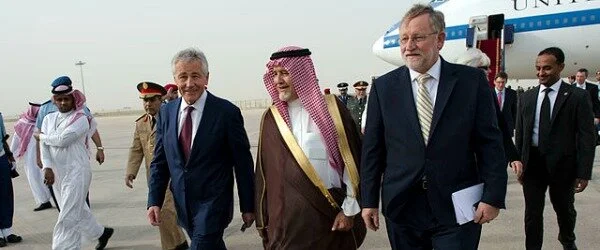
In a time of unprecedented regional upheaval, relations between the United States and Saudi Arabia are fraying. They have reached such a dangerous low that President Barack Obama will personally meet with King Abdullah in March to try to repair the damage. How have things gotten this bad? Observers point to disagreements over policy on Syria, Iran, Palestine, Lebanon, Egypt, and Bahrain. What they may be missing is that these disagreements are not causes of the breakdown in relations, but the symptoms of the true cause: the United States and Saudi Arabia have wildly divergent views on the Kingdom’s existential threats and what Washington is prepared to do to help the Saudis quell those threats.Previously, the Saudis felt in times of crisis they could count on the United States to protect its vital interests. As a “status quo” power, Saudi Arabia resisted revolutionaries of all kinds—occasionally asking for American help in doing so. The first time the Kingdom sought American assistance was when Shi’a extremists intending to sweep across the whole Middle East overthrew the Iranian government in 1979. The Reagan administration sold the Saudis five E-3 Sentries equipped with advanced early warning systems. Then in 1990, with Saddam Hussein’s tanks rolling southward, the Saudis invited American forces to park in the Arabian Desert to deter Iraqi invasion.This time, however, the threat the Saudis perceive is not external per se. Rather, the Saudis are more concerned with a battle over transnational identities than with Iran’s nuclear programs. With old regime structures falling in Iraq, Syria, Egypt, Libya, Lebanon, and other countries in the last 10 years, unresolved feuds have re-emerged. Religious and ideological conflicts are complicating the Saudis’ ability to see clear, predictable political forces. Sunni–Shi’a conflict has broken out in Lebanon, Syria, Iraq, and Bahrain. Meanwhile, competing versions of Islamism—from populist-leaning Muslim Brotherhood movements to puritan Salafi networks and even radical jihadism—are competing, sometimes violently, for public influence. The speed with which these struggles can morph into armed insurgency or civil war deeply disturbs the Saudi monarchy, which expects its citizens to peacefully adhere to the current regime structures of Wahhabi Islam and centralized political power in the royal family. The Saudis see the pre-Arab uprising political order as much more simple, stable, and conducive to their interests. Cordesman says that when it comes to Saudi threat perception, “[i]nternal security and counterterrorism come first.”This struggle for the future of Islam is not something the United States can easily influence. It was relatively easy to confront threats to Saudi interests if it meant exporting or deploying military forces against an offensive military threat from another country. But in the battle for identity in the Islamic world, American influence remains peripheral. Moreover, the Saudis see their Shi’a population in the east as a political weakness that foes (most obviously Iran) can exploit. The Saudis have interpreted American reaction to the uprisings in Egypt and Bahrain as evidence that Washington will likely not support the actions Riyadh believes will be necessary to suppress a potential uprising.The Saudi anxieties about societies in the Middle East are aggravated by what they see as diminished American interest in the region. The Obama administration spent political capital solidifying American relationships in East Asia in his first term, which sparked wild Saudi fears of total abandonment. Saudi columnists even talk of an American–Iranian plot to undermine the Kingdom. They also feel a lack of personal rapport with the President, registering their disapproval by expanding defense partnerships with other countries like Indonesia and France.The relationship is not doomed to failure, however. The Obama administration has made it clear in the last couple of months that it hears Saudi complaints and wants to be responsive to them. President Obama will make a trip to Riyadh in March to smooth over relations. Further, Secretary of State John Kerry has pushed back against the idea that the United States is withdrawing from its security commitments in the Middle East. Obama, meanwhile, conspicuously omitted any talk of pivoting to Asia in his most recent State of the Union Address.In recent days, there have been positive signs coming out of the Kingdom, too. The Canadian subsidiary of American defense contractor General Dynamics signed a $10 billion deal to supply the Saudis with armored vehicles. The Syria portfolio in Riyadh has been handed over from Intelligence Chief Prince Bandar bin Sultan to Interior Minister Muhammad bin Nayef, who is reportedly interested in expanded cooperation with Washington. Nayef, who is respected in American policy circles, is considered a possible successor to the Saudi throne. He also is the survivor of an assassination attempt by al Qaeda and is seen as less likely to embrace radical jihadi forces in Saudi foreign policy.Saudi Arabia and the United States can take further steps to repair the alliance. The most basic measure is to hold high-level, strategic talks to discuss the nature of their relationship. This may seem like an obvious requirement for a security alliance, but it can easily be neglected. “We have what I would call ‘highly focused conversations,’ on particular issues,” veteran Middle East hand Dennis Ross said last month. What Washington needs to be doing, Ross said, is “take senior [Saudi] officials across the landscape” and talk broadly about American strategic thinking.The current U.S.–Saudi relationship potentially leaves both nations unprepared for future crises in a volatile region. The lack of mutual understanding about American posture must be addressed first. To feel secure in an alliance, the Saudis must feel that they understand—and can count on—the American response to specific sources of Saudi anxiety. That means the Obama administration will have to reach a set of understandings for what would happen if Saudi Shi’a began to “cause trouble” for the government while Washington negotiates with Iran. If Iran makes political concessions to Saudi Shi’a a precondition of their continued negotiations, what would the American response be? These are the kinds of things Saudi leaders ponder.The United States and Saudi Arabia still benefit from wide-ranging cooperation. It is too soon to declare the alliance dead. However, both sides need to better articulate their views about the regional picture and what the future of the United States is in that picture. The upcoming meeting between President Obama and King Abdullah will be a critical juncture to determine whether the recent diplomatic discord is a hiccup or a sign of more dire things to come.